We all requested the question at some point or another: in which document format ought to I shop my snap shots or virtual creations? It is to reply this vague question that I advocate you these days to tour the record codecs maximum utilized in photography. As you may see, every format has its blessings and drawbacks …
Photo document codecs
If, whilst taking pictures, the selection of the recording layout of your pix is restricted (Raw, JPEG and, to a lesser volume, DNG ), it is a very extraordinary one story after a piece of retouching your pictures. To convince yourself of this , go to the File> Save as menu of your favorite photograph enhancing software and observe the special solutions available to you. Admit that there may be sufficient to lose its Latin.
I assure you right away, the report codecs to recognize in virtual images may be counted at the palms of 1 hand. These 5 codecs will let you meet all your needs inside the introduction and dissemination of your pix.
I additionally point out that I’m now not going to talk approximately Raw and DNG formats in this text for the easy cause that they’re not output codecs ( we cannot export a picture in Raw or DNG of a software program of retouching ).
One ultimate factor: for every photo, ensure to click on it to see the photograph at a hundred%. That being said, allow’s take a look at those special formats now …
Photo formats for the Web
1. JPG or JPEG layout (Joint Photographic Experts Group)
Universal file layout par excellence, it’s far the first-class regarded. It is present each to your cameras and at the net.
Advantages :
It permits a sizable compression of the pix without massive loss of excellent, supplied to select the least crucial level of compression (see comparison beneath).
It is a commonplace layout, as properly in taking pictures, diffusion or even printing. It is therefore, read with the aid of all virtual gadgets (computer systems, cellular telephones, DVD players, tv, drugs, digital frames …)
The photos in JPEG are at once exploitable and diffusable within the nation.
Disadvantages:
It does no longer deal with layers. A photomontage together with layers and recorded in JPEG will then be “flattened” and could lose all its layers.
It does not take care of transparent areas and therefore shows white in which there’s no colour.
Due to its compression, its retouching capacity is limited ( see my article on the comparison between Raw and JPEG files ).
Example 1: this photo in JPEG layout, compressed to the maximum, has the consequences, a strongly degraded picture.
Example 2: 2d photo in JPEG layout, this time compressed at the least. The gradients and colors are well restored.
2. The GIF format (Graphic Interchange Format):
He had his moment of glory at the start of the Internet. Before the arrival of flash or video, it turned into the preferred solution for site owners to put a little animation on websites. It remains widely used these days by using avatars creators. It is likewise a compressed format but not like JPEG, it’s miles lossless and also you cannot pick the level of compression.
Advantages :
It therefore permits to create small animations (you’ll almost say that GIF allows the display of the distinctive layers of a photo even supposing they are no longer preserved in the document). However, be cautious with the size of the photograph that may quickly turn out to be important and pose problems of fluidity at the internet pages.
It manages the display of transparent regions.
It gives the possibility to interleave pictures, ie to show steadily its pictures which then present an increasing number of info. It was something interesting about 56k modems, it’s far a great deal less so nowadays.
It is lighter than different formats (when it does not show animations).
Disadvantages:
It handiest handles 256 hues and is therefore now not appropriate for showing images or drawings with gradients.
Example 3: this photograph in GIF layout, reveals a sturdy moire (particularly inside the sky and the combination of the diver) and a pixelization of the textual content.
Example 4: small animation Gif, displayed in a discounted length because the burden of this one could were too critical if one had stored the size of show of the alternative pictures.
3. PNG layout (Portable Network Graphic):
Third and closing compressed document layout, it turned into created after the JPEG that it competes without delay on the internet or it’s also very gift.
Advantages :
Like GIF, it manages obvious areas.
It allows compression without loss of information. The photographs acquired are therefore of higher great.
Disadvantages:
The weight of the record is heavier than for the JPEG. So be careful with big pics which can sluggish down the show of pages.
It is not as generic as JPEG and is consequently no longer performed on all TVs or DVD players.
Example five: this image in PNG format, has a weight higher than all other codecs, but its pleasant is top-quality.
The formats for printing your pics
1. The PSD format (PhotoShop Document):
This is the native layout of Photoshop. It integrates seamlessly into the digital innovative workflow of the Adobe suite. This is of path the favourite layout for photographers and photograph designers.
Advantages :
There is no compression with loss of image. All editing work (layers, layers, selections, masks …) is retained.
It is examine by means of all picture enhancing software program.
Disadvantages:
This loss of compression also becomes a hassle because the document can quickly develop to a colossal length (numerous hundred megabytes if your image is big and has many layers)
2. The TIF or TIFF layout (Tag Image File Format):
Also tremendous, it has emerge as the standard within the own family of uncompressed image report formats. It is perfectly appropriate for printing your pics
Advantages :
Allows the PSD to preserve layers.
It is read by using all picture editing software (which includes image printing terminals).
It also lets in the compression of layers, with out loss of data.
Disadvantages:
I do not recognize any !
Be aware that the technical traits of TIFF and PSD codecs are almost same. So, the question of while to use the TIFF or PSD format arises …
Photo codecs for archiving
To keep and transmit its digital pictures, one ought to of course opt for a document format this is readable by using all digital gadgets. You have the choice between two formats:
1. The JPEG format
Universal format par excellence, taking over little area, it’s far best for archiving your pictures. It’s no longer for not anything that it is the default layout in your virtual cameras.
2. The TIFF layout
If you have selected the RAW format for shooting and / or you are retouching your pictures, the TIFF layout is flawlessly indicated. Universal, with lossless compression, it has the whole thing you want to make certain the sustainability of your paintings.
Before concluding, here’s a desk showing the feasible uses of your digital pictures consistent with the kind of record.
Also read more,
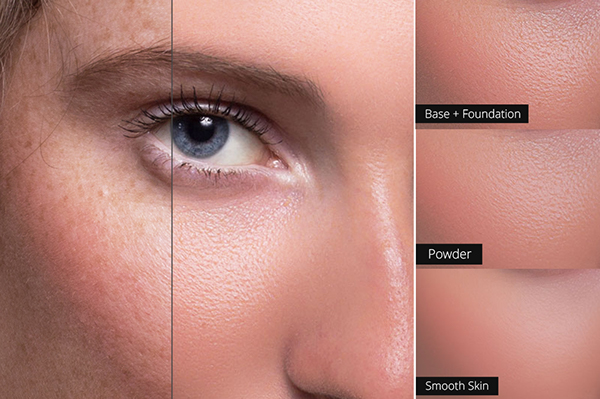
Photograph Retouching for Portrait, item or Jewelry picture. We evacuate Wrinkles, residue, Scratches and other undesirable components guaranteeing top quality.
Tag:
 samiulrahat blogs